

Rediscovering Yourself Course
Reconnecting with who you are beyond burnout
This course helps you reconnect with what matters to you, what you’ve lost touch with, and what you want to embrace as you recover.
It’s one big step toward finding yourself again.
Why people take this course
They feel disconnected from who they were before burnout
They’ve lost motivation, joy, or a sense of purpose
They’re unsure what they want—or what’s even possible right now
What’s included
Five short video lessons that guide reflection, meaning-making, and forward movement
Links to trusted mental health screenings and support resources
Guided instructions and a practical workbook for creating a burnout-informed bucket list
Real examples from my own burnout bucket list, showing how goals shift during recovery
The burnout screening to reassess where you are in the recovery process
Continuing Education Credit
All of the courses in the Kickstart series are approved for continuing education (CE).
Want to know how many CEs you can earn? View the CE breakdown by discipline here.

If you already have access, just log in and start the course.
If you’re not enrolled yet,
click here.
Rediscovering Yourself During Burnout: Personal Recovery Kickstart
Key Terms
-
A phenomenon in which one knows the right action to take but is constrained from taking it.
-
The psychological, social, and spiritual impact of events involving betrayal or transgression of one's own deeply held moral beliefs and values occurring in high stakes situations.
Moral injury is not a recognized mental health disorder in itself, but may be associated with PTSD or depression.
-
Stress can be defined as a state of worry or mental tension caused by a difficult situation.
-
Psychological safety is a shared belief within a team or organization that it is safe to take interpersonal risks without fear of embarrassment, rejection, or punishment. It means coworkers and leaders can speak openly, ask questions, admit mistakes, share struggles, and challenge ideas without worrying about negative consequences.
In the context of burnout prevention and recovery, psychological safety is foundational. When employees feel safe to express stress, raise concerns, and seek support, organizations can address burnout early rather than react to full-scale crises. Conversely, workplaces where fear, shame, or silence dominate often see higher rates of exhaustion, disengagement, and turnover.
-
Burnout is a syndrome conceptualized as resulting from chronic workplace stress that has not been successfully managed.
It is characterized by emotional exhaustion, depersonalization (cynicism), and decreased efficacy at work (wondering if one is making a difference).
-
Depression is a mood disorder that causes a persistent feeling of sadness and loss of interest. Also called major depressive disorder or clinical depression, it affects how you feel, think and behave and can lead to a variety of emotional and physical problems. You may have trouble doing normal day-to-day activities, and sometimes you may feel as if life isn't worth living. (Mayo)
-
Experiencing occasional anxiety is a normal part of life. However, people with anxiety disorders frequently have intense, excessive and persistent worry and fear about everyday situations. Often, anxiety disorders involve repeated episodes of sudden feelings of intense anxiety and fear or terror that reach a peak within minutes (panic attacks). (Mayo)
-
Somatic practices help people release damaging, pent-up emotions in their body by using various mind-body techniques.
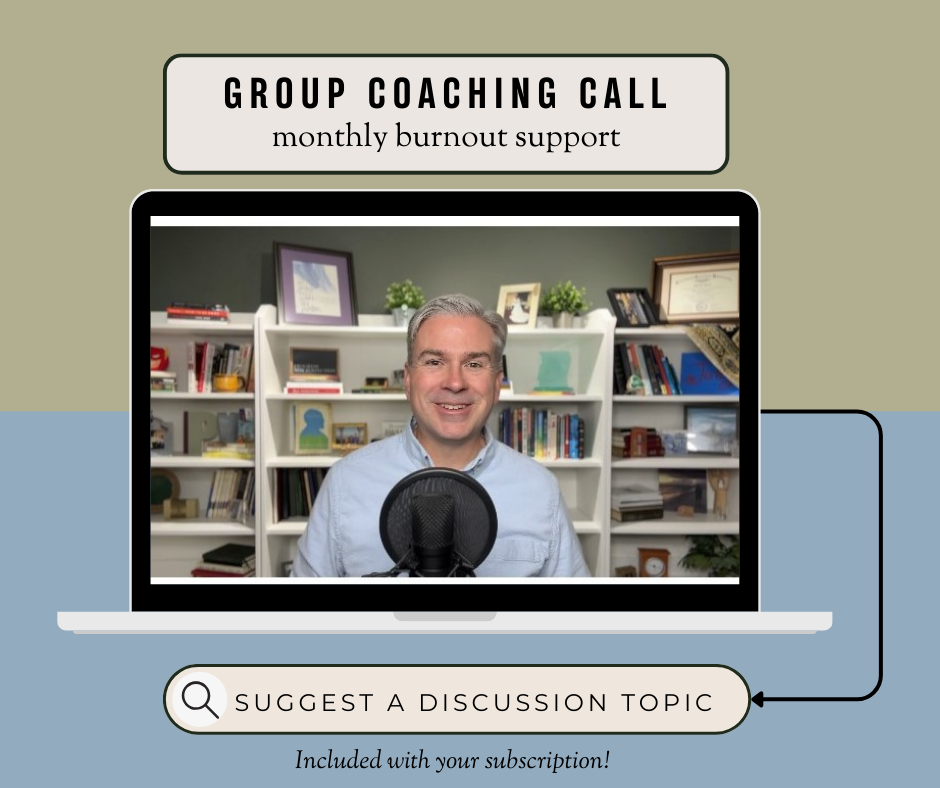
Shape the Conversation. Strengthen Your Recovery.
Every month, we come together for a live group coaching call. Our sessions are supportive, practical discussions designed to help you and your peers overcome burnout and build healthier teams.
It starts with a brief discussion kickoff from Patrick Riecke, often inspired by topics submitted by you. From there, we open up the floor for shared insights, strategies, and encouragement.
You’ll receive a personal email invitation from Patrick before each session as a reminder to join the conversation and a chance to stay connected, supported, and engaged.